Oct 22, 2026Reptile Incubation Guides
Reptile Egg Incubation Temperature Guide: Ideal Ranges for Different Species
Species-by-species incubation temperatures and humidity for snakes, geckos, lizards and turtles — and why holding temperature steady matters more than hitting one perfect number.
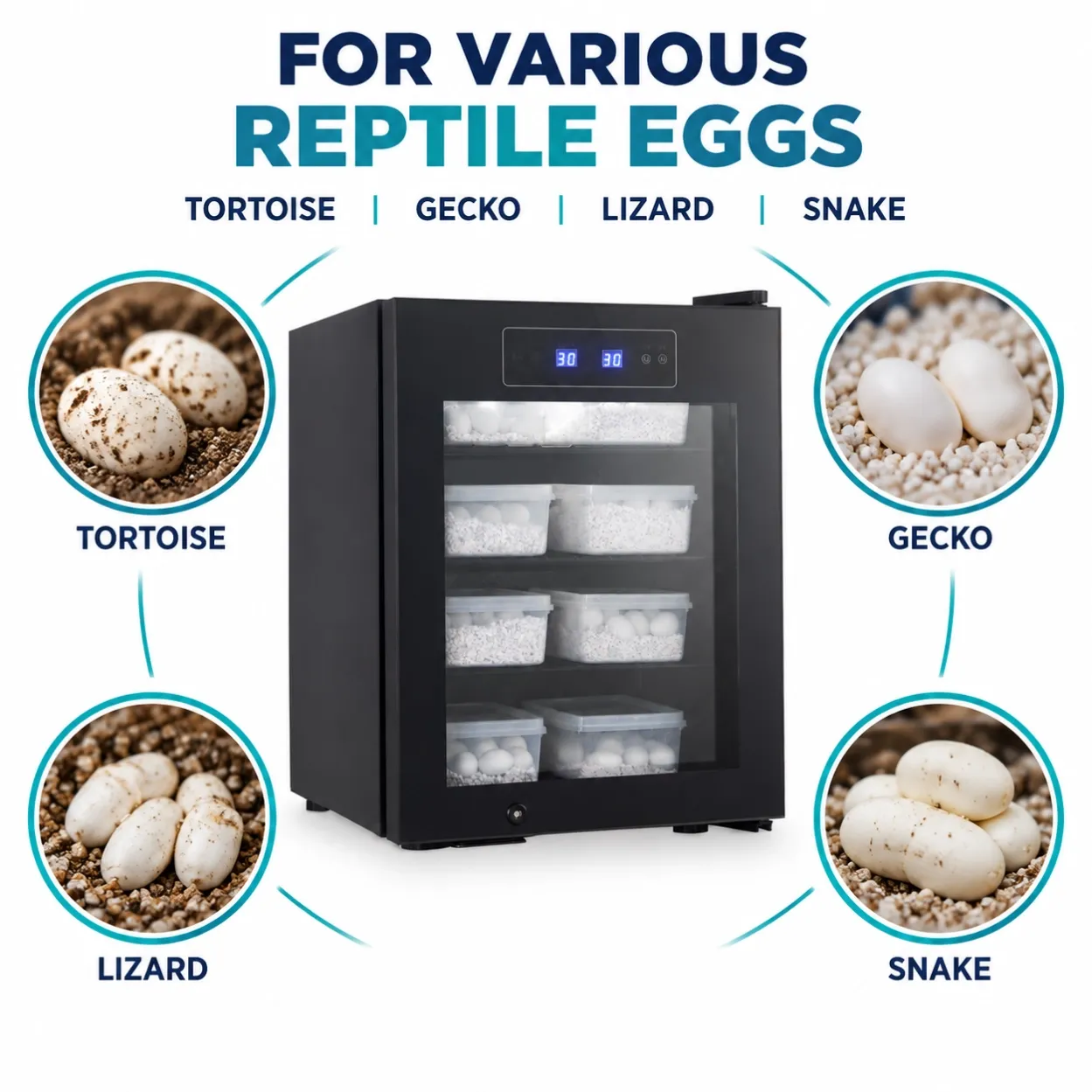
Reptile Egg Incubation Temperature Guide: Ideal Ranges for Different Species
Successful reptile egg incubation depends on more than simply keeping eggs warm. Temperature stability, humidity management, proper ventilation, and species-specific incubation conditions all play important roles in embryo development and hatching success.
Whether you are breeding geckos at home, managing snake breeding projects, or operating a commercial reptile breeding facility, understanding the correct incubation temperature is essential.
In this guide, Vantico Reptile explains how incubation temperature affects reptile eggs, why different species require different conditions, and how a professional reptile egg incubator can help maintain a more consistent incubation environment.
1. Why Is Incubation Temperature Important for Reptile Eggs?
Temperature is one of the most important environmental factors affecting reptile embryo development.
Unlike mammals, most egg-laying reptiles depend on external environmental conditions to support embryonic development.
Incorrect incubation temperatures may result in:
- Slower or interrupted embryo development
- Reduced hatching success
- Developmental abnormalities
- Increased embryo mortality
- Changes in hatchling characteristics, including sex in certain temperature-dependent species
Temperature stability is just as important as the selected temperature itself. Frequent fluctuations can expose developing embryos to unnecessary environmental stress.
For professional breeders, the goal is to maintain a consistent, species-appropriate incubation environment throughout the incubation period.
2. Reptile Egg Incubation Temperature Ranges by Species
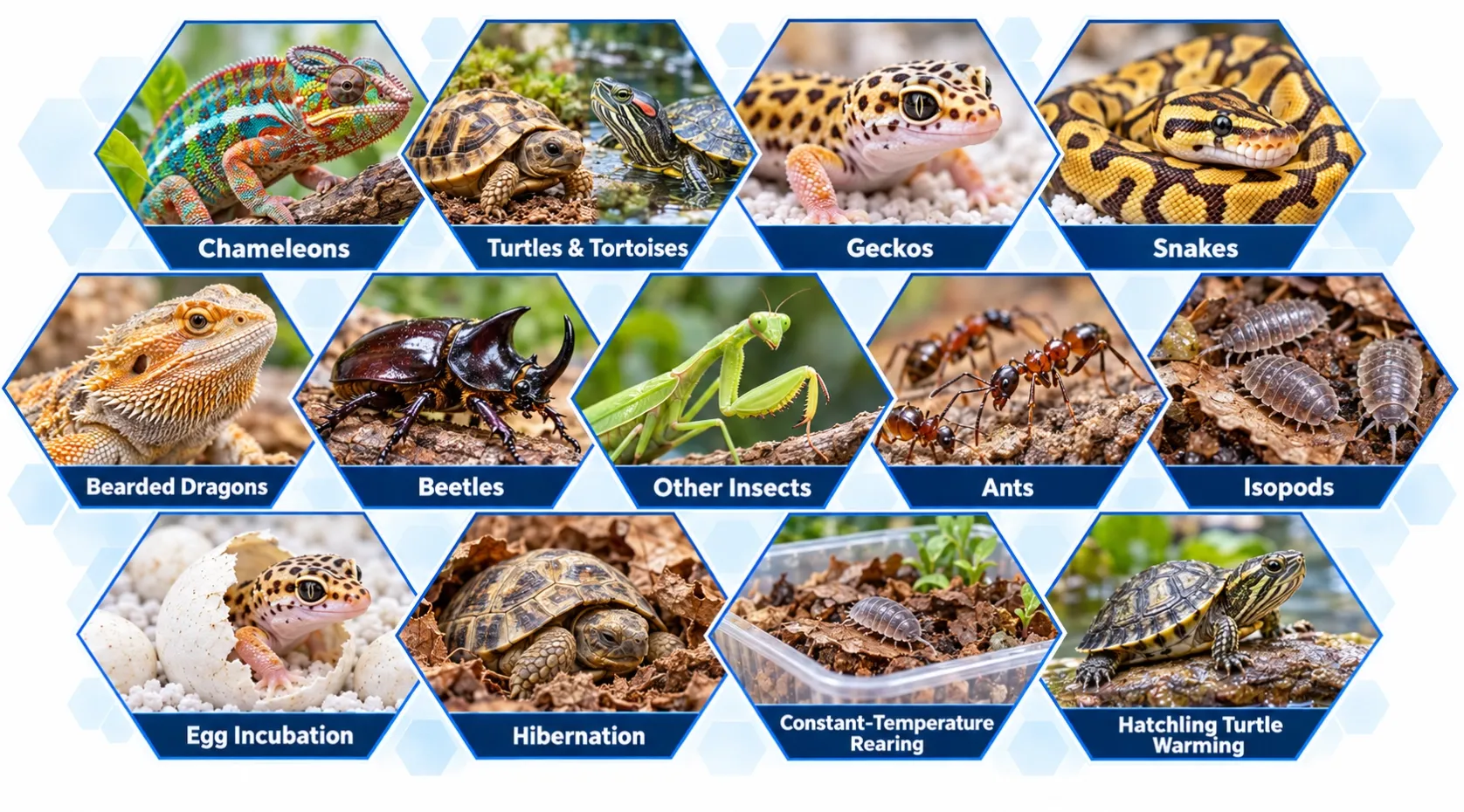
Different reptile species have different incubation requirements. Even closely related species may require different temperatures, humidity conditions, and incubation periods.
The following examples provide a starting point for understanding these differences.
Reptile Species | Incubation Temperature Reference | Important Notes |
|---|---|---|
Leopard Gecko | Approximately 26–32°C (79–90°F) | Temperature influences offspring sex; use a species-specific target |
Ball Python | Commonly around 31–32°C (88–90°F) | Verify the appropriate egg-level temperature and incubation protocol |
Corn Snake | Commonly around 27–29°C (81–84°F) | Stable conditions and suitable moisture are important |
Bearded Dragon | Commonly around 28–30°C (82–86°F) | Avoid overheating and monitor incubation containers |
Turtle and Tortoise Eggs | Species-dependent; approximately 27°C (80°F) for some box and water turtle protocols | Temperature and substrate moisture requirements vary widely |
Important: These are broad educational references, not universal setpoints. Different species, breeding lines, incubation methods, and temperature measurement locations may require different settings. Always verify your target conditions against reliable species-specific breeding or veterinary guidance.
Leopard Gecko Egg Incubation
Leopard geckos are popular among reptile enthusiasts and professional breeders.
Their incubation temperature is particularly important because temperature influences the sex of developing hatchlings.
Studies and zoological references describe different sex ratios at incubation temperatures around 26°C, 29–31°C, and 32°C.
However, temperature should not be adjusted solely to produce a desired sex ratio without considering embryo health and suitable species-specific protocols.
A reliable incubator can help breeders maintain the intended conditions throughout the incubation period.
Snake Egg Incubation
Snake eggs generally require stable temperatures and carefully managed moisture levels.
Ball pythons and corn snakes, for example, have different incubation requirements. A temperature suitable for one species should not automatically be applied to another.
For breeders managing multiple snake species, separate incubation containers, accurate temperature monitoring, and carefully documented settings are particularly important.
Lizard Egg Incubation
Lizard incubation requirements differ substantially between species.
Geckos, bearded dragons, and other lizards may have different preferred incubation temperatures and humidity conditions.
Before incubation begins, breeders should confirm the appropriate requirements for the exact species being bred.
Turtle and Tortoise Egg Incubation
Turtle and tortoise eggs can be especially sensitive to incubation temperature and substrate moisture.
Certain species also exhibit temperature-dependent sex determination.
For these eggs, proper moisture balance, careful handling, and accurate temperature control are essential.
Because turtle and tortoise species vary widely in their incubation needs, a single universal temperature is not recommended.
3. How Humidity Affects Reptile Egg Incubation
Temperature control alone is not enough for successful incubation.
Humidity helps regulate moisture exchange between eggs and their surroundings. Incorrect moisture conditions may negatively affect embryo development.
What Happens When Humidity Is Too Low?
Insufficient moisture may cause excessive water loss from the eggs.
Possible warning signs include:
- Prematurely dehydrated eggs
- Excessive shell collapse or shrinking
- Dry incubation substrate
- Reduced embryo viability
What Happens When Humidity Is Too High?
Excessively wet conditions may create other problems, including:
- Persistent condensation
- Water collecting around eggs
- Increased mold risk
- Poor gas exchange when ventilation is inadequate
The ideal humidity level depends on the species, incubation medium, container design, and air exchange.
For professional incubation, it is important to monitor both the incubator environment and the actual conditions inside the egg containers.
4. Why Temperature Stability Matters More Than Constant Adjustment
One common incubation mistake is repeatedly changing the temperature setting in response to small display fluctuations.
Frequent adjustments can make the incubation environment less stable.
A well-designed incubation system should maintain its selected conditions with minimal unnecessary intervention.
For professional breeding projects, useful equipment features include:
Accurate digital temperature control
Allows operators to select and monitor the required incubation temperature.
Reliable heating and cooling
A system equipped for both heating and cooling can be useful when surrounding temperatures vary above and below the desired setpoint.
Air circulation
Properly designed circulation helps reduce temperature differences inside the cabinet.
Independent temperature verification
A calibrated thermometer or data logger placed near the eggs can help verify actual incubation conditions.
Suitable shelf organization
Organized shelves and incubation containers make it easier to manage different clutches and maintain breeding records.
These features can be especially valuable for commercial breeding facilities handling multiple incubation batches.
5. Common Reptile Egg Incubation Mistakes
Even experienced breeders can encounter incubation problems. Understanding common mistakes can help improve consistency.
Mistake 1: Using the Same Temperature for Every Species
Different reptiles have different incubation requirements.
Always research and verify the correct conditions before placing eggs inside an incubator.
Mistake 2: Placing Eggs Directly Against Heating or Cooling Surfaces
Localized hot or cold spots may expose eggs to temperatures different from the main control display.
Use suitable incubation containers and verify the temperature around the eggs.
Mistake 3: Ignoring Humidity and Substrate Moisture
A stable temperature does not compensate for incorrect moisture conditions.
Select an appropriate incubation medium and monitor it throughout incubation.
Mistake 4: Frequently Opening the Incubator
Repeatedly opening the cabinet can disturb temperature and humidity conditions.
Organize incubation containers to allow efficient inspections with minimal disturbance.
Mistake 5: Rotating or Unnecessarily Moving Eggs
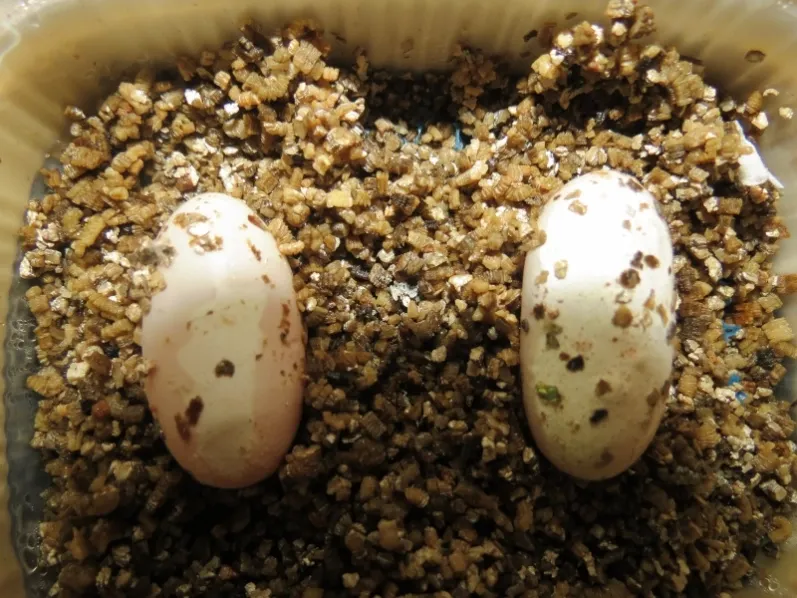
Unlike poultry eggs, reptile eggs generally should not be turned during incubation.
Rotating developing eggs may damage delicate embryonic structures. Maintain their original orientation unless a qualified species-specific protocol indicates otherwise.
Mistake 6: Using an Incubator Without Independent Monitoring
The displayed temperature may not always reflect the conditions inside an individual egg container.
Independent monitoring can help identify temperature differences and equipment issues.
6. How to Choose the Right Reptile Egg Incubator
Choosing a suitable reptile incubator depends on the scale of your breeding operation, your target species, and your environmental control requirements.
For Small-Scale Breeders
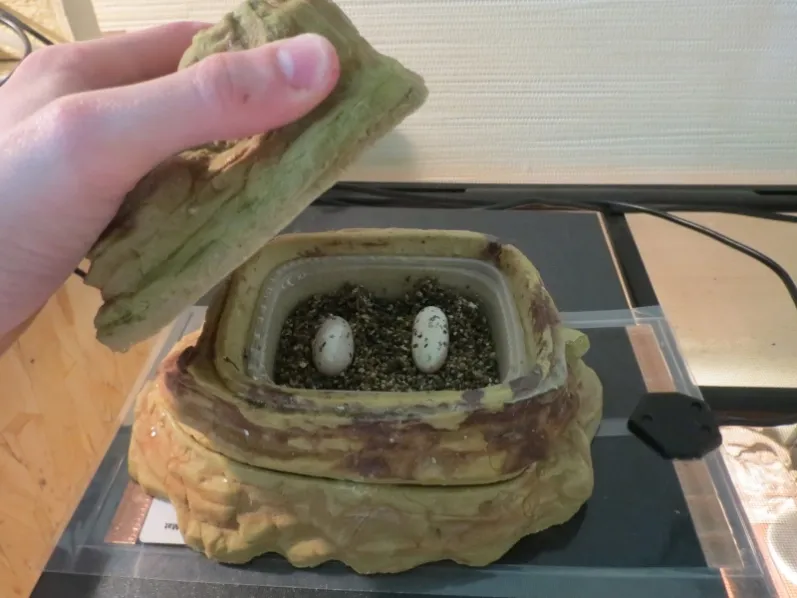
Compact incubators may be suitable for hobbyists or breeders managing a limited number of clutches.
Important considerations include:
- Suitable capacity
- Accurate temperature adjustment
- Reliable temperature stability
- Easy operation
- Convenient cleaning and maintenance
For Professional Reptile Breeders
Professional breeding operations often need greater capacity and more organized incubation management.
Useful features may include:
- Heating and cooling capability
- Digital temperature monitoring
- Fan-assisted air circulation
- Adjustable or removable shelves
- Space for multiple incubation containers
- Suitable temperature and humidity monitoring arrangements
For Commercial Breeding Facilities
Large breeding facilities may require higher-capacity cabinets designed for managing multiple batches.
When comparing commercial reptile incubators, consider:
- Usable internal capacity and shelf spacing
- Temperature control range and stability
- Heating and cooling performance under expected ambient conditions
- Air circulation and ventilation design
- Accessibility for cleaning and inspection
- Maintenance requirements and technical support
- OEM/ODM customization options
Choosing an incubator based on workflow requirements can be more valuable than selecting a cabinet based on total volume alone.
7. Professional Reptile Egg Incubation Solutions from Vantico Reptile
Vantico Reptile specializes in reptile incubation equipment for breeders, distributors, and commercial breeding operations.
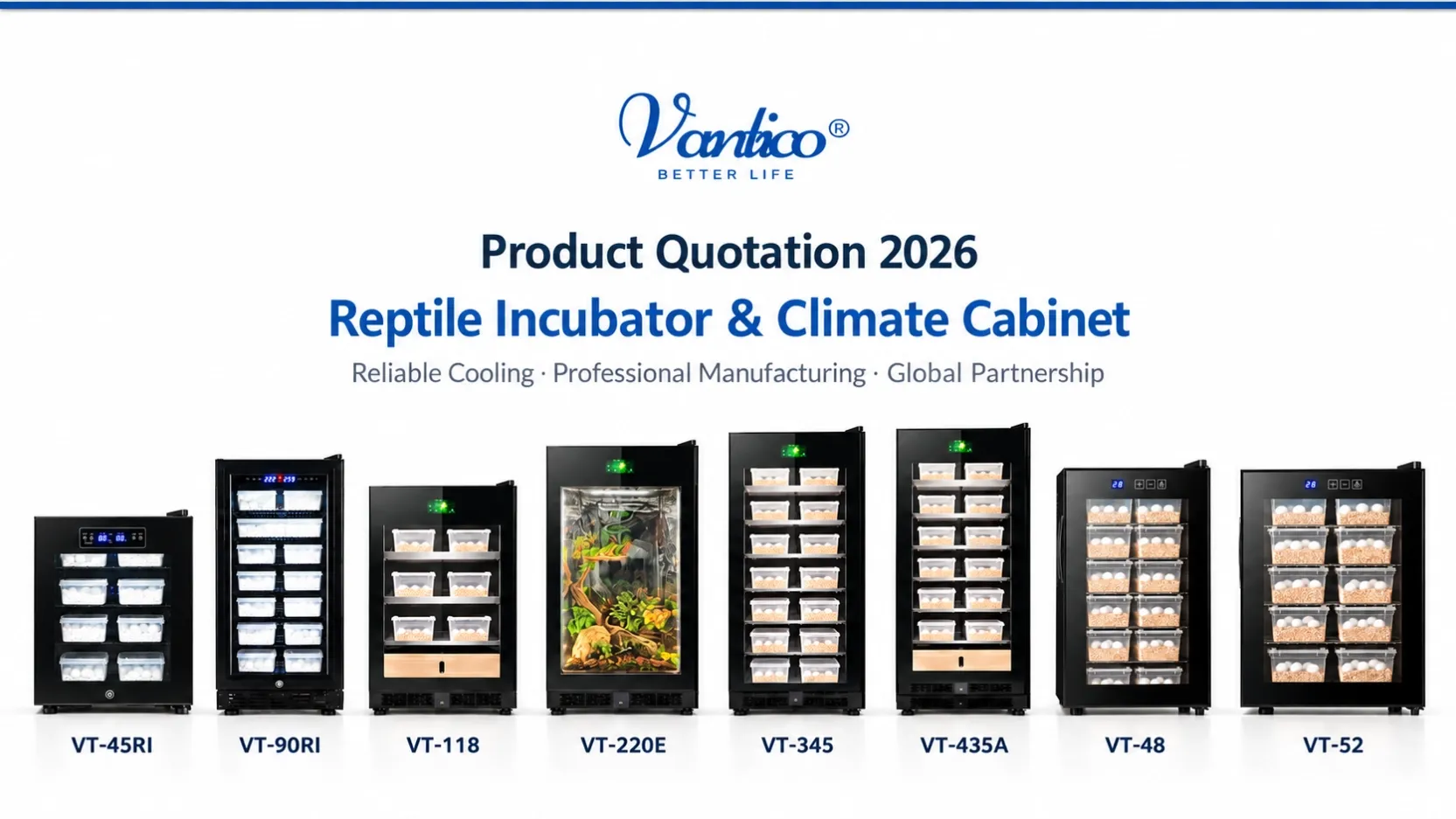
Our product range includes compact incubation solutions and larger multi-level reptile incubator cabinets for professional applications.
Depending on the model, available features may include:
- Compressor cooling
- PTC heating
- Digital or TFT touch-screen controls
- Fan-assisted air circulation
- Removable or adjustable shelf systems
- Temperature and humidity monitoring or control
- OEM/ODM customization options
Our VT-345 professional reptile egg incubator, for example, is designed for multi-level incubation applications and offers compressor cooling, fan-assisted circulation, and removable shelving.
When selecting equipment, customers should confirm the available control range, humidity functions, shelf configuration, and operating conditions for the specific model.
Our team can help distributors and breeding facilities compare suitable products based on capacity, application, and customization requirements.
8. Frequently Asked Questions About Reptile Egg Incubation
What is the best temperature for reptile egg incubation?
There is no single temperature suitable for every reptile species. The appropriate incubation range depends on the animal, incubation method, and species-specific developmental requirements.
Can different reptile eggs be incubated in the same cabinet?
Different species may be incubated within the same cabinet only when their environmental requirements are compatible and the equipment can maintain suitable conditions for each clutch. Separate cabinets or independently controlled compartments may be necessary.
Is humidity as important as temperature?
Yes. Moisture conditions influence reptile egg development, and unsuitable humidity or substrate moisture can reduce incubation success.
Can reptile eggs be turned during incubation?
Reptile eggs generally should not be rotated after development has begun. Maintaining the original orientation is important for protecting developing embryos.
Do I need a heating and cooling reptile incubator?
A heating-and-cooling incubator can be advantageous when ambient temperatures may rise above or fall below the desired incubation temperature. The appropriate system depends on your location, breeding conditions, and target species.
What size reptile egg incubator should I choose?
Choose an incubator based on the number of clutches, incubation container dimensions, shelf space, and expected future breeding requirements—not cabinet volume alone.
How can commercial breeders improve incubation consistency?
Use documented species-specific incubation protocols, monitor conditions independently, maintain clean equipment, and keep accurate records for each clutch.
9. Final Thoughts
Successful reptile egg incubation requires a careful balance of temperature, moisture, ventilation, and proper handling.
Because different species have different developmental requirements, breeders should avoid relying on universal incubation settings.
For professional operations, a reliable incubator can help create a more controlled environment and support consistent incubation management.
At Vantico Reptile, we are committed to providing practical incubation equipment solutions for reptile breeders, distributors, and commercial breeding facilities.
Looking for a Professional Reptile Egg Incubator?
Explore our reptile incubation solutions or contact our team for product specifications, wholesale quotations, and OEM/ODM customization options.
Vantico Reptile — Professional Reptile Incubation Solutions
WhatsApp: +86 188 0259 7986
Disclaimer: This article provides general educational information. Incubation settings should be verified for the specific species and breeding protocol. Consult a qualified reptile veterinarian or experienced species specialist when necessary.