Sep 13, 2026
What Temperature Range Do Reptile Egg Incubators Need?
A practical overview of incubation temperature ranges for common reptile species, and how modern incubation cabinets hold them stable.
Temperature is the single most important variable in reptile egg incubation. Unlike bird eggs, reptile embryos do not regulate their own temperature, so the surrounding air does the work. If the temperature drifts too low, development slows or stops; if it runs too high, deformities and mortality rise quickly.
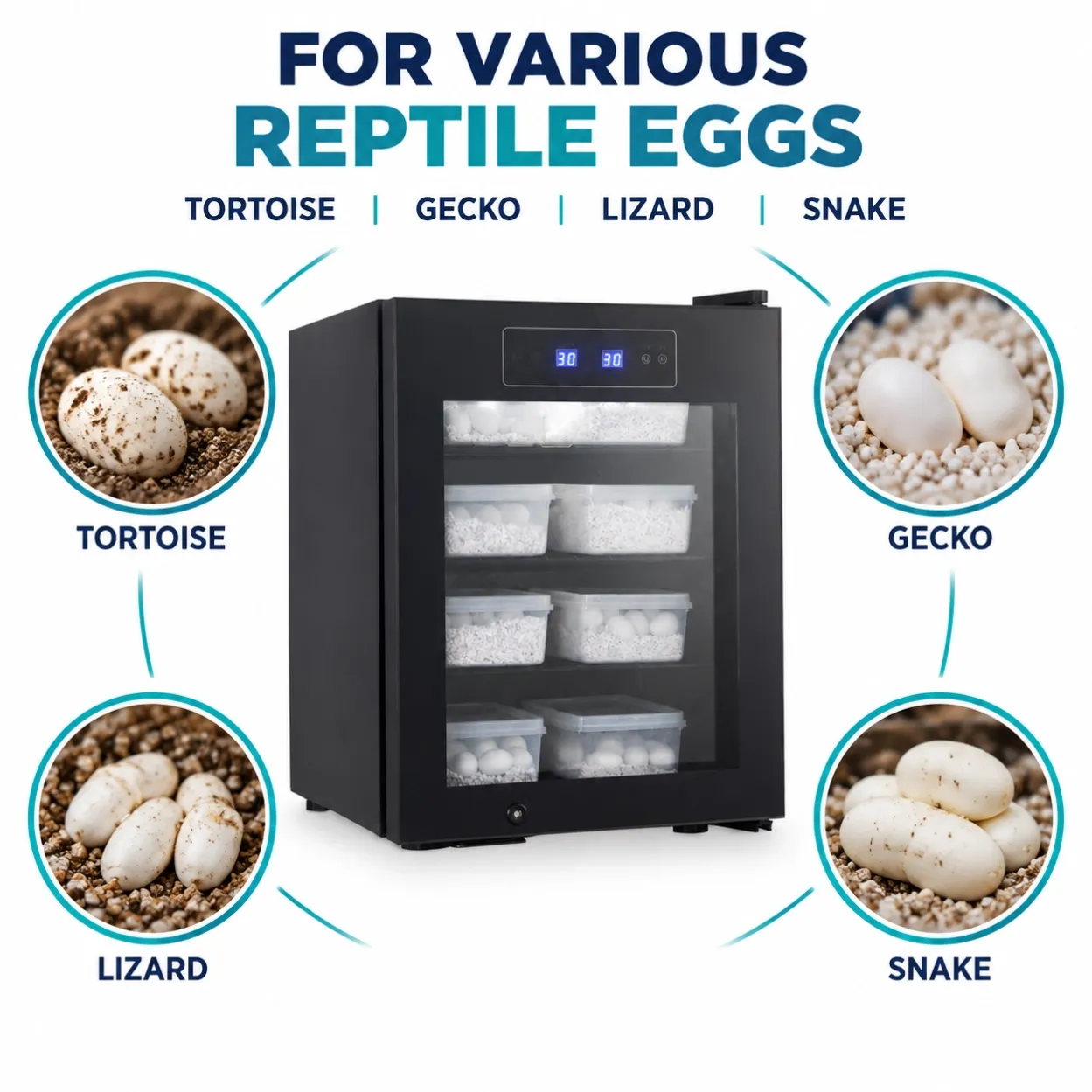
Different species call for different setpoints, which is why experienced breeders look for equipment with a wide, adjustable operating range rather than a fixed preset. General-purpose reptile incubation typically happens in a band of roughly 26–32 °C, while some species benefit from cooler or warmer profiles. This is why cabinets that support a 5–40 °C adjustable range cover the needs of geckos, snakes, lizards and tortoises within a single unit.
Stability matters as much as the setpoint. Cheap enclosures cycle several degrees around the target, which can skew hatch ratios and even influence hatchling sex in temperature-dependent species. Professional incubation cabinets address this with dual temperature sensors, compressor-based cooling for warm ambient rooms, and PTC heating for efficient, gentle warming. Fan-assisted circulation keeps every shelf within a narrow band instead of creating hot and cold layers.
Practical setup tips: place a calibrated thermometer at egg level, avoid direct sunlight on the cabinet, keep the door closed during incubation, and log readings for the first few days after any change. When moving between species, adjust the setpoint gradually and give the cabinet time to stabilise before loading new clutches.
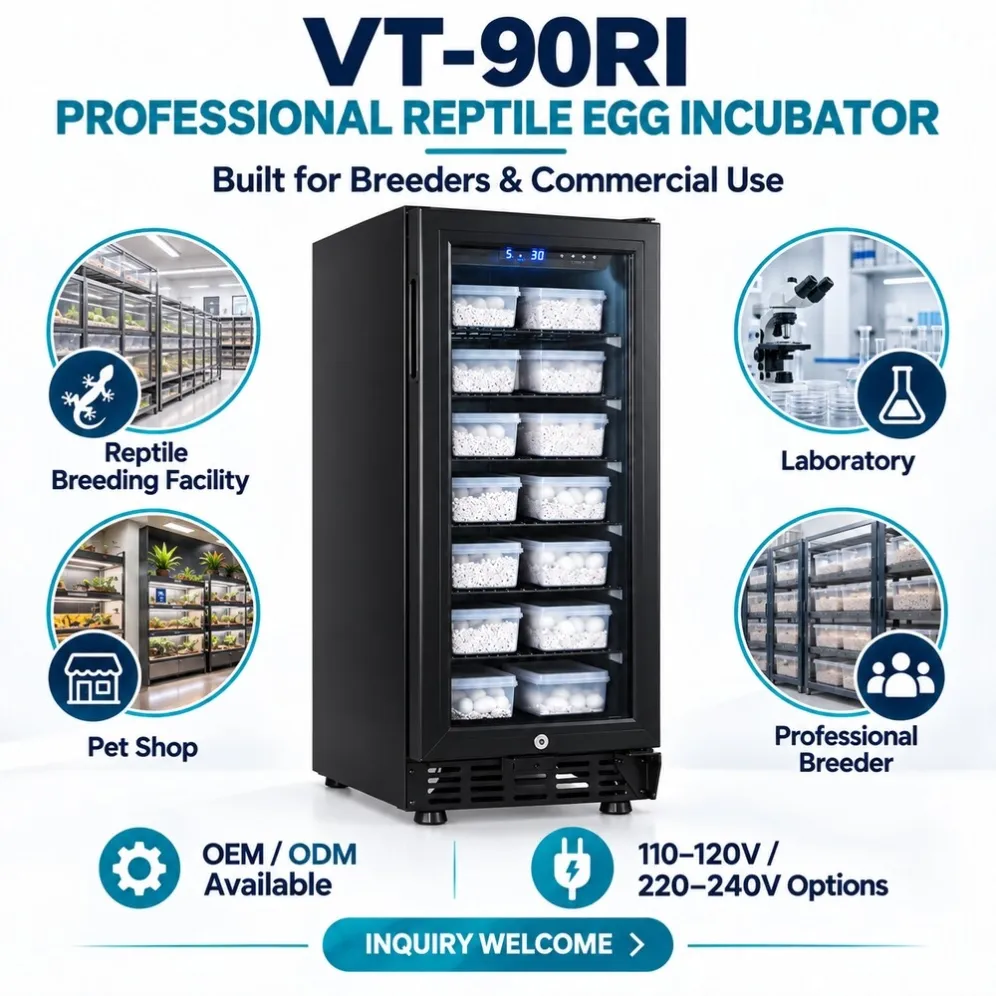
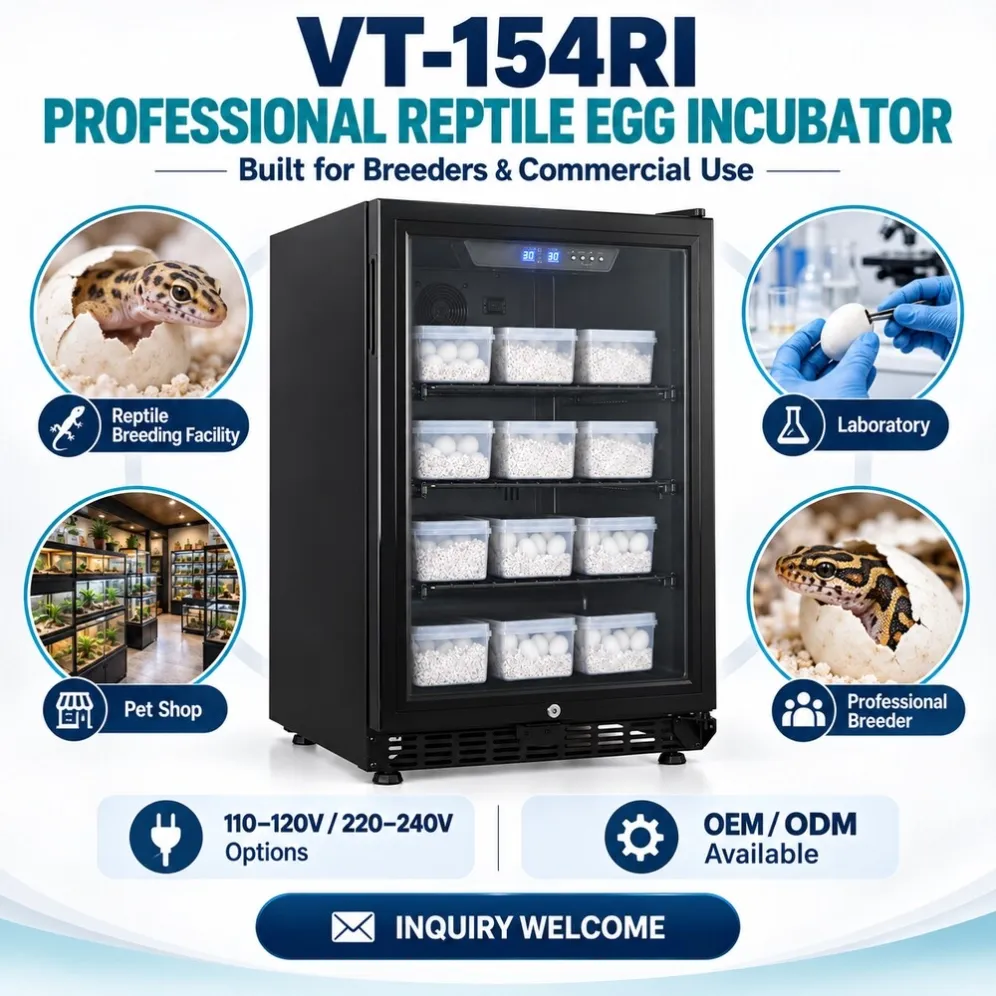
Vantico reptile incubation cabinets support adjustable temperature control from 2–40 °C or 5–40 °C depending on the model, from 16 L compact units to 760 L commercial cabinets. Contact us to discuss the right configuration for the species you breed.
Price: Request a Quote.